A Vogue-worthy primer that unpacks the labels you’ll see on organic bedding—GOTS and OEKO-TEX—so you can sleep soundly knowing your sheets are truly as pure as they promise. From what they cover to how to verify them, this is your elegant, evidence-based guide to sleep health and environmental stewardship.
In a world obsessed with wellness, transparency is the new luxury. Certifications are the couture of textiles: quiet, credible, and essential. Read on for a discerning, insider’s look at what these badges truly certify, how they differ, and the smart questions to ask when you’re shopping for bedding that aligns with your values, your health, and your style.
When you start exploring organic bedding, two names consistently rise above the noise: GOTS (Global Organic Textile Standard) and OEKO-TEX. Each serves a distinct purpose in the storytelling of your sleep environment, guiding you toward products that are truly organic, ethically produced, and free from harmful substances.
GOTS is the most rigorous standard for organic textiles, tracing a product from fiber to finished goods. It covers ecological and social criteria, including the use of certified organic fibers, prohibition of most synthetic chemicals, environmental controls, and fair labor practices. OEKO-TEX, by contrast, is a certification that emphasizes testing for harmful substances at various stages of production, ensuring garment and textile products meet safety thresholds for human health. Together, they form a compelling duo: GOTS assures organic integrity; OEKO-TEX confirms chemical safety in final goods.
For the consumer, these marks translate into a streamlined decision framework: you are choosing textiles that are not only free from many hazardous chemicals but also produced with attention to environmental impact and worker welfare. It’s a quiet luxury—confidence in the fabric your body touches every night.
GOTS certifies the entire supply chain, from organic fiber cultivation to environmentally responsible processing and social criteria. It ensures:
In bedding, a GOTS label signals that your sheets, pillowcases, duvets, and related textiles are produced with organic fiber origins and rigorous processing standards.
OEKO-TEX certification focuses on testing for harmful substances and ensuring that textiles are free from a spectrum of chemicals that could affect human health. It includes several product lines, such as:
OEKO-TEX is a practical safety net for consumers who want a powerful second check beyond certifications that emphasize organic origin, ensuring a clean sleep surface.
1) Look for a complete certification mark and the certifier’s name (e.g., GOTS, OEKO-TEX) on the packaging or product page. A genuine label should be traceable through official databases or the certifier’s website.
2) Check the fiber content and percentage. For GOTS, the organic fiber percentage should meet or exceed the threshold stated by the standard, often with a GOTS logo adjacent to the fiber composition.
3) Read accompanying documentation. Some brands provide Certificate of Certification numbers or QR codes that link to the certifying body’s records for your product batch.
4) Ask questions. If in doubt, approach customer service with specifics: the fiber source, processing steps, dye chemistry, and social compliance measures. Ethical sleep starts with transparent answers.
When selecting bedding, your choices should harmonize with both certification goals and daily comfort. Here are practical tips to help you curate a sleep environment that feels indulgent without compromising values.
This thoughtful approach blends luxury with responsibility, echoing the editorial standard of elevated, informed living—where every thread is purposeful and every choice contributes to a healthier planet and a richer sleep.
From the early foundations of organic farming to contemporary standards, these figures personify the enduring quest for purity, ethics, and sensory delight in textiles. Their ideas illuminate how far bedding has traveled—from field to bedside.
Often considered the father of modern organic farming, Howard advocated for soil health and ecological balance. His ideas about the farm as a living system laid groundwork that informs contemporary standards for organic fibers—emphasizing sustainable cultivation that ultimately influences the textiles that end up in our beds.
A pioneer in consumer health textiles research, Gebhart championed the idea that textile chemical safety should be integral to product design. His work influenced early standards around chemical testing and consumer protection, echoing today’s OEKO-TEX philosophy of toxicity screening for textiles.
A leader in sustainable textiles research, Wu’s work intersects chemistry, ethics, and consumer education. Her advocacy for robust certification ecosystems—like GOTS and OEKO-TEX—has inspired fashion and bedding brands to disclose supply chain practices, empowering shoppers to make informed, stylish, and responsible choices.
When you invest in bedding labeled with GOTS or OEKO-TEX, you’re not simply purchasing a product; you’re embracing a philosophy of health, responsibility, and refined living. The textures, the breathability, the comfort—these elements are the surface of a deeper commitment: to people, to places, and to the planet. The path to a more conscious sleep begins with trusted labels, questions asked, and a willingness to choose quality over convenience.
In the pages that follow, you’ll find a curated editorial path—long-form guides, explainers, and shopping checklists—that translate these certifications into practical shopping confidence. From understanding GOTS and OEKO-TEX to decoding fiber content and care instructions, the goal is to empower you to curate a sleep sanctuary that truly honors your health and the environment.
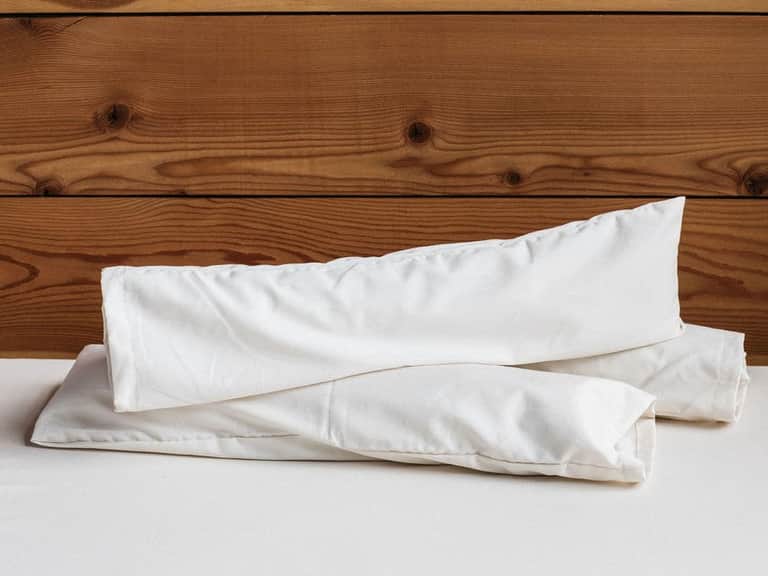
A compact, breathable support pillow featuring 15 oz of organic wool in an organic cotton sateen shell. It’s designed to cradle the neck while embracing the purity of certified organic materials.
Origin: Cotton grown in India; wool sourced from a US co-op or New Zealand suppliers; finished in a GOTS-certified facility in Pakistan.
Note: This product is a highlight from the showcased selection that demonstrates GOTS-certified wool and organic cotton construction.
As you weave certification labels into your shopping lexicon, you’re not just choosing a bed sheet or pillowcase—you’re adopting a language of integrity. GOTS and OEKO-TEX are not merely labels; they are commitments that honor the journey from soil to slumber. With each purchase, you participate in a global conversation about health, ethics, and beauty in everyday life.
If you’re ready to dive deeper, here are ideas you can implement now:
Your sleep, elevated by informed choices, is a signature of refined living.
This article is part of the Direction A editorial line for certifiedorganicbed.com, a resource dedicated to educational guides, certification explainers, and care tips for organic bedding.