Pillow Guide
Choosing an Organic Wool Pillow: Loft, Support, and Care
A wool pillow is less about sinking into a cloud and more about finding a thoughtfully balanced surface: breathable, responsive, and shaped to your preferred way of sleeping. The right choice depends on loft, construction, certification, and a care routine you can realistically maintain.
Choosing a pillow is an intimate decision. It is the first thing your head meets at night and often the last detail you adjust before settling in. Organic wool pillows appeal to sleepers who want a natural fill and a less conventional feel, but the label alone cannot tell you whether a particular pillow will suit your neck, shoulders, or sleep position. Height and firmness matter. So do the way the wool is assembled, whether the fill can be adjusted, and what the certification actually covers.
Wool behaves differently from down, polyester, shredded foam, or solid foam. Rather than offering a single uniform feel, a wool pillow may be built from layers of batting that provide steady support and a gently resilient surface. Over time, those layers can settle, changing the pillow’s loft. That is not necessarily a flaw, but it is a practical detail to consider before buying.
This guide explains how to assess pillow loft and support for side, back, and stomach sleeping, what to look for in GOTS-certified wool and organic cotton covers, and how to care for a pillow that may need airing and spot cleaning rather than frequent machine washing.
What makes an organic wool pillow different?
Wool is a natural fiber with a springy structure. In a pillow, that structure can give the fill a degree of resilience: it compresses under weight and pushes back rather than behaving like a loose cloud of down or a fixed slab of foam. The feel depends on the wool’s preparation, the amount of fill, the case fabric, and the construction method. Two pillows described as wool-filled may feel quite different in use.
Wool is also known for managing moisture and allowing air to move through its fibers. These qualities can make it appealing to people who dislike a pillow that feels overly warm or clammy. They do not guarantee that every sleeper will feel cool, however. Room temperature, bedding, personal comfort, and the rest of the sleep setup all contribute to how warm a pillow feels.
An organic claim should be read as a material and sourcing detail, not as a promise of a particular medical or sleep outcome. A certified organic wool fill may reassure shoppers about the standards governing that material and its processing. It does not automatically mean that the pillow is hypoallergenic for every person, nor does it determine whether the pillow’s shape will provide suitable support.
Loft and support: start with your sleep position
Loft is the pillow’s height, especially when it is resting under your head. Support describes how well it maintains a comfortable position rather than collapsing or pushing the head upward. These ideas are related, but they are not interchangeable: a pillow can be tall yet too soft to hold its shape, or relatively low but firm enough to feel supportive.
A useful starting point is to think about the space between your head and mattress while you are in your usual sleeping position. The pillow should help your head and neck rest in a comfortable, relatively neutral alignment. Mattress firmness, shoulder width, body proportions, and personal preference all affect the height that feels right, so sleep position is a guide—not a precise formula.
Side sleepers
Side sleeping usually creates a wider gap between the mattress and the side of the head than back or stomach sleeping does. Many side sleepers therefore prefer a medium-to-higher loft with enough resilience to keep the head from dropping toward the mattress. A pillow that is too low may feel as though it leaves the neck unsupported; one that is too high can tilt the head upward and create pressure or discomfort.
Consider how your shoulder settles into the mattress, rather than choosing by a pillow’s advertised height alone. A softer mattress may allow the shoulder to sink farther, changing the amount of loft needed. If you are considering layered wool batting, ask whether the thickness can be selected or altered. A choice of pillow thicknesses can make it easier to begin with a profile that suits your build and sleeping surface.
Back sleepers
Back sleepers often prefer a moderate loft that supports the natural curve of the neck without pushing the chin toward the chest. Too little height may leave the head tipped back; too much can force it forward. The aim is a balanced, easy position, not a rigidly fixed posture.
Wool’s layered construction may offer a steady, less fluid feel than loose-fill alternatives. That can be welcome if you want the pillow to retain its overall form, but the ideal density is personal. If possible, review the manufacturer’s measurements and construction details, and check whether the pillow is offered in more than one thickness.
Stomach sleepers
Stomach sleeping generally places the head closer to the mattress, so a low-loft, softer pillow is often more comfortable than a tall one. Excess height may turn the head sharply to one side or lift it more than feels natural. A dense, layered wool pillow could feel too substantial for some stomach sleepers, even if it suits someone who sleeps on their back or side.
If you change positions during the night, look for a pillow that feels manageable across those positions rather than perfect for only one. A smaller or lower profile may be easier to reposition, but the appropriate choice depends on how often you move and what feels comfortable when you wake.
Why layered wool batting feels distinctive
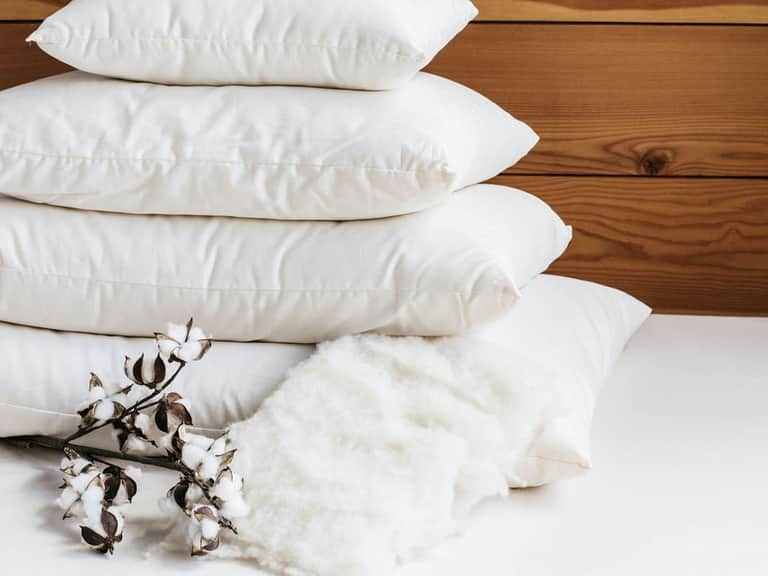
Some wool pillows are hand-built with batting arranged in layers inside a fabric case. This construction tends to create a more composed, structured feel than loose wool fill that can shift freely. It may also let a maker offer different thickness options. The result is not necessarily firm in the way a dense foam pillow is firm; it is better understood as a springy, fibrous support with a distinct shape.
Layered batting can settle with regular use. The pillow may become less lofty or feel more compact over time as the fibers respond to pressure. That settling is a normal consideration for natural fills, and it makes construction and care instructions especially important. Ask whether layers are removable or adjustable before assuming that “layered” means the pillow can be customized after purchase. A pillow may be made in layers without being designed for at-home adjustment.
For example, Certified Organic Wool Bed Pillows are described as hand-built with layered GOTS-certified wool batting in an organic cotton sateen case, with a choice of thicknesses for the Standard pillow. The product information notes that wool layers may settle during regular use and recommends spot cleaning and periodic airing. Those details are useful when comparing a pillow’s initial loft with its likely care routine and longer-term feel.
When comparing construction, look beyond broad phrases such as “supportive” or “adjustable.” Check whether the fill is loose, layered, tufted, or enclosed in compartments; whether the cover opens; and whether any adjustment is intended to be performed by the owner. If details are missing, ask the manufacturer or retailer before making a decision.
How to read organic and textile certifications
Certification language can help shoppers distinguish a documented standard from an unverified marketing description. The key is to identify the scope. A certificate might apply to the wool batting, the cotton cover, a processing facility, or a broader finished-product chain. Do not assume that one certified component means every material and stage has the same certification.
GOTS—the Global Organic Textile Standard—is a widely used standard for organic textiles. When a pillow is described as GOTS-certified, check the product information to see whether that claim applies to the wool, the cotton fabric, or both. For instance, a listing may specify GOTS-certified wool batting and an organic cotton case separately. That distinction is more informative than a general “organic pillow” claim.
OEKO-TEX Standard 100 is a separate textile certification associated with testing for certain harmful substances in textile products. It is not the same as organic certification, and it does not establish that a fiber was grown organically. If both GOTS and OEKO-TEX appear in product details, read what each applies to rather than treating the labels as interchangeable.
Look for the name of the standard, the material or component covered, and enough identifying information to verify the claim. A certification logo can be a useful clue, but a logo without a clear explanation may not answer the most important question: exactly which part of the pillow is certified? Retailer descriptions can summarize a product, while certification bodies and current documentation provide more authoritative detail about a standard’s requirements and scope.
A quick certification checklist
- Is the wool fill specifically identified as certified organic?
- Is the cotton cover certified, described as organic, or both?
- Does the listing state the certification standard by name?
- Is the claim about the finished pillow or only one component?
- Can the seller provide additional documentation or clarify the certificate’s scope?
Care is part of the purchase decision
Organic wool pillows often require a different routine from pillows designed for repeated machine washing. Many should be spot cleaned and aired periodically rather than washed in a home laundry cycle. Wool batting can be damaged by excessive agitation, heat, or improper drying, and a large pillow may be difficult to rinse and dry evenly. Always follow the specific care label: instructions vary by product and construction.
Before buying, decide whether the care requirements fit your household. If you prefer bedding that can be washed frequently in a standard machine, a pillow marked spot clean only may not be convenient. A removable, washable pillowcase can help protect the surface, but it does not make the pillow itself machine washable. Check whether a separate case is included and how it should be laundered.
Everyday care habits
- Use a washable pillowcase. It provides a practical first layer against body oils, hair products, and everyday dust. Launder the case according to its label.
- Air the pillow when appropriate. Follow the manufacturer’s guidance about airing or sunning. Periodic ventilation can refresh a pillow, but prolonged or intense exposure may not suit every cover or fill.
- Spot clean carefully. Use only the method recommended by the maker, apply moisture sparingly, and avoid soaking wool batting unless the instructions expressly permit it.
- Dry thoroughly. If a pillow becomes damp, follow the care label and ensure it is completely dry before covering it again. Trapped moisture can undermine freshness.
- Avoid unapproved laundering. Do not assume that a natural material can tolerate a washer, dryer, bleach, or fabric softener. Check the pillow’s instructions before using any cleaning product.
Wool’s naturally occurring lanolin may remain in some fills, depending on how the wool is processed. That is a material characteristic, not an indication that a pillow needs routine washing. If you have sensitivities or specific cleaning needs, review the product information and consult the manufacturer before purchasing.
Common assumptions worth reconsidering
“Organic” does not tell you how a pillow will feel
Certification can help clarify material sourcing and processing, but it cannot select the right loft for your body. A certified wool pillow may still feel too high, too firm, or too structured for your preferences. Treat certification and comfort as two separate parts of the decision.
Natural fill does not mean no maintenance
Wool is a natural material, yet a wool pillow may have more specific care requirements than a washable synthetic alternative. Spot cleaning, airing, and protecting the surface with a case may be essential to keeping the pillow fresh. Read the care instructions before purchase rather than after a spill.
A higher loft is not always more supportive
Height without appropriate resilience can leave the head out of balance; a very firm or tall pillow can also feel uncomfortable. Think about the relationship between head, neck, shoulder, and mattress, then consider the pillow’s ability to hold its form under your weight.
Adjustability should be confirmed, not inferred
Layered batting may allow a maker to offer several thicknesses, but it does not necessarily mean the owner can remove or rearrange layers. Confirm the available options and any adjustment process. This is especially important if you are uncertain about your preferred loft.
A considered shopping checklist
Before choosing an organic wool pillow, compare the details that affect comfort as closely as the claims that affect sourcing. A concise checklist can bring clarity to a category where product descriptions sometimes rely on broad language.
- Sleep position: Which position do you spend most of the night in, and do you change positions frequently?
- Loft: Is the pillow offered in a height or thickness that fits your usual posture and mattress?
- Feel: Is the fill layered batting, loose wool, or another construction? Does the description suggest a structured or more yielding surface?
- Settling: Does the manufacturer explain how the fill may change with use and how to refresh or maintain it?
- Adjustment: Are layers removable, or are different thicknesses only available as separate options?
- Materials: What is the fill made of, and what fabric forms the case?
- Certification: Which standard applies to the wool, the cover, or the complete product?
- Care: Is the pillow spot clean only, and is periodic airing recommended?
- Practical protection: Is a separate washable case included, or will you need to find one that fits?
If you are shopping online, product dimensions and fill weight can offer useful context, but they do not perfectly predict feel. Two pillows with similar measurements may respond differently because their batting, density, and assembly are not identical. Where return or trial policies are available, read the conditions carefully; a trial period is only useful if you understand how returns are handled and whether the pillow must remain in a particular condition.
Finding the right balance
The best organic wool pillow is not necessarily the loftiest, the most heavily certified, or the one with the longest list of material claims. It is the pillow whose height and resilience suit your usual sleep position, whose construction feels comfortable to you, and whose maintenance requirements fit your routine. Certification adds valuable context when it clearly identifies the components covered, but it should complement—not replace—close attention to design and care.
For side sleepers, begin by considering the space between shoulder and head. For back sleepers, look for a balanced profile that supports without pushing the head forward. For stomach sleepers, a lower loft may feel more natural than a tall, substantial shape. Across all positions, remember that mattress firmness, body proportions, and personal preference influence the result.
Wool’s layered, springy character can offer a distinctive alternative to conventional fills. It may settle over time, and it may call for airing and spot cleaning instead of routine machine washing. Those are not small-print details; they are part of what it means to choose an organic wool pillow. When loft, support, certification, and care are considered together, the choice becomes less about a label and more about a well-matched sleep surface.