Organic mattress guide
What to Look for in an Obasan Organic Mattress
A mattress is less a finishing touch than the foundation of a bedroom: the quiet, consequential layer that shapes how the body rests. When researching an Obasan organic mattress, look beyond the promise of natural materials. Construction, firmness, sourcing and the exact scope of each certification all matter. This guide offers a considered way to compare the details—and to decide whether a particular model fits your sleep preferences.
Published October 28, 2026
Begin with the mattress, not the label
“Organic mattress” can sound like a complete description, but it is only a starting point. A mattress is an assembled product: it may have a cover, comfort layers, a support core, adhesives or other components. Those elements can be made from different materials, sourced through different supply chains and covered by different standards. A useful comparison therefore begins with a straightforward question: what, exactly, is inside the mattress?
For an Obasan mattress, seek a clear materials list for the specific model and size you are considering. Note the cover fabric, the filling or comfort layers, the support system and any materials used to join or finish the components. If the product information describes a layer as “natural,” “eco-friendly” or “non-toxic,” treat those words as prompts for more detail rather than as substitutes for it. Ask what the material is, how it is processed and which documentation supports the claim.
This kind of close reading need not make the purchase feel clinical. In fact, it can make the decision more personal. Material and construction influence the mattress’s feel, resilience, temperature characteristics and care requirements. The right choice is the one whose verifiable details align with your priorities and whose comfort suits the way you sleep.
Understand the role of latex layers
Latex is often discussed as if it were a single, uniform mattress material. In practice, the experience depends on the latex’s source and processing, the way it is formed, its position in the mattress and how it is combined with other layers. A latex comfort layer may cushion pressure points, while a firmer or denser layer beneath it may contribute to support. The arrangement matters as much as the ingredient name.
When reviewing an Obasan model, look for a layer-by-layer description. How many latex layers are present? Where is each placed? Are their dimensions or firmness levels specified? Is the latex described as natural, organic, blended or otherwise processed? If a product page does not answer these questions, ask the manufacturer or retailer for the written specification. A confident decision is easier when the construction is explained in concrete terms rather than broad marketing language.
Also consider how a mattress is intended to be adjusted, if at all. Some designs may offer modular components or different layer configurations; others may have a fixed construction. Do not assume that a feature is available across every model or size. Confirm the options, any associated cost, and whether changing the arrangement later is possible.
Latex can have a buoyant, responsive feel, but the word alone does not predict how a particular bed will feel to you. Layer thickness, firmness, body weight, sleep position and the mattress base all contribute. When available, an in-person trial can help clarify whether the surface feels gently yielding, distinctly firm or too springy. If trying the mattress is not practical, ask about the sleep trial, return process and any conditions that apply before ordering.
Separate cushioning from support
Comfort and support are related, but they are not interchangeable. Comfort is the immediate sensation at the surface: plush, buoyant, cushioned, firm or somewhere between. Support is how well the sleep surface helps maintain a comfortable, reasonably neutral posture over the night. A mattress can feel soft at first touch and still provide substantial support; a firm mattress is not automatically supportive for every body.
Sleep position offers a useful framework, not a rulebook. Side sleepers often pay close attention to cushioning at the shoulders and hips, where pressure can build if the upper surface is too firm for their body. Back sleepers may look for a balance that feels stable without creating excessive pressure beneath the lower back. Stomach sleepers commonly prefer a surface that limits the feeling of the hips sinking too far. Individual proportions, mobility, health considerations and personal comfort can alter all of these preferences.
Instead of choosing by label alone, consider what your current mattress does well and where it falls short. Do you wake with pressure at the shoulder? Does your midsection feel unsupported? Do you want more surface cushioning, or a steadier feel? These observations make questions to a retailer more useful. They also help you assess a trial period: notice whether comfort is consistent across the night, not only during the first few minutes of lying down.
Firmness descriptions are not universal measurements. One brand’s “medium” may feel different from another’s, and the same mattress can feel different to two people. Ask whether a stated firmness refers to the complete mattress, a particular layer or a subjective rating. If two people share the bed and prefer different feels, ask whether the model offers distinct configurations for each side. Verify availability rather than assuming that a split option exists.
Examine the cover and the finishing details
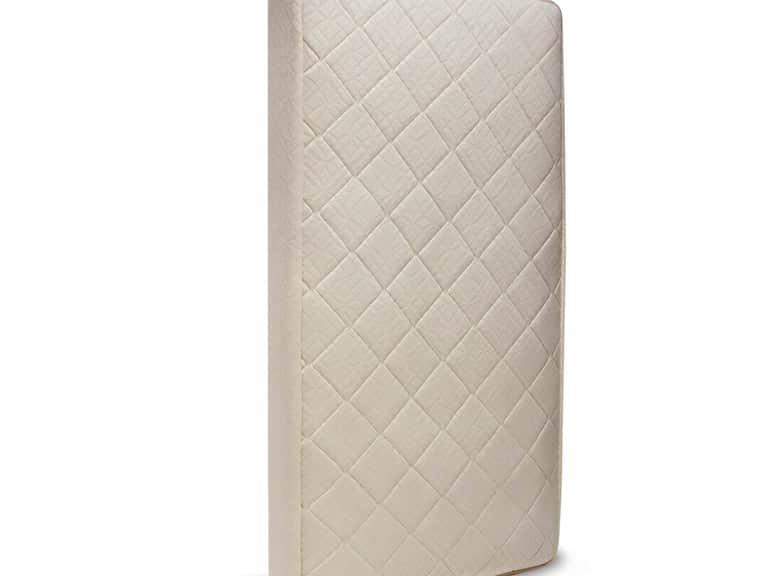
The cover is the first material you touch, but its role extends beyond hand-feel. Its fiber, weave, quilting and construction can influence the surface’s texture and how the mattress behaves with bedding. Find out whether the cover is removable, whether it may be washed and what care instructions apply. A cover that cannot be removed should not be treated like a washable protector; cleaning requirements differ, and following the manufacturer’s guidance helps preserve the product.
Ask how the cover is attached and whether it contains additional padding or other materials. If your priorities include avoiding particular substances, request details about dyes, finishes, adhesives and any other relevant components. A general statement about the mattress’s primary fiber does not necessarily describe every finish or accessory. The aim is not to presume a problem, but to understand the complete item you are bringing into your home.
Do not overlook practical specifications. Check mattress height, dimensions, weight, foundation compatibility and delivery arrangements. Confirm whether the mattress requires a particular base or slat spacing, and whether the existing bed frame will provide the support the manufacturer recommends. These details can affect performance and may also matter for warranty coverage.
Read organic mattress certifications carefully
Certification can make material claims easier to evaluate, but a certificate is meaningful only when you know what it covers. A standard may apply to a raw fiber, a finished textile, a processing facility or a finished product. It may address some stages of production and not others. Never assume that a certification associated with one component automatically applies to the entire mattress.
When a retailer or manufacturer names a certification, check the documentation and ask precise questions:
- Which exact component or material is certified?
- Does the document identify the relevant product, facility or supplier?
- Is the certification current, and can its scope be verified?
- Does it cover organic sourcing, processing, chemical restrictions, social criteria or another defined set of requirements?
- Are all components covered, or are some supported by different standards or supplier declarations?
Keep the distinction between certification and testing in view. A certification scheme establishes compliance with its own defined requirements. A laboratory test may examine specified substances or performance characteristics. Neither should be casually presented as proof of every possible environmental or health claim. Similarly, “certified,” “organic” and “natural” are not interchangeable terms. Their meaning depends on the applicable standard, jurisdiction and the exact claim being made.
A careful reader can ask for a certificate number, a current certificate or a link to the certifier’s verification resource. If the company cannot provide public documentation, ask what evidence it can share and whether it applies to the product you are considering. Clear answers do not need to be theatrical; they should simply identify the material, the standard and the boundaries of the claim.
Trace the material story beyond the word “organic”
Organic status is one part of a product’s material story, not a complete account of its impact. Sourcing, processing, manufacturing location, durability, repair options and end-of-life pathways may also matter to a buyer. If these are priorities, ask where the mattress materials originate and where the finished product is made. A brand may be able to provide information for some components and less for others; the important thing is to distinguish documented detail from an unqualified impression.
It is also worth asking how the mattress is expected to age. Natural materials are not maintenance-free, and a layered mattress can have specific care and rotation requirements. Find out whether rotation is recommended, whether the mattress should ever be flipped, and how to protect it from moisture or stains. Ask what the warranty covers, how long it lasts and what exclusions apply. Warranty language is not a guarantee that the mattress will feel unchanged for its entire life, but it can clarify the maker’s stated responsibilities.
Consider durability in practical terms. A longer-lasting mattress that continues to suit its owner may be a more thoughtful choice than replacing a less suitable bed quickly. Yet longevity claims are best assessed alongside construction information, warranty terms and the company’s stated care instructions—not treated as an automatic consequence of an organic label.
Use a trial period as a real evaluation
A mattress is difficult to assess in a showroom, where the visit is brief and the conditions are unlike an ordinary night. If a sleep trial is available, read the terms before purchase. Confirm the length of the trial, whether a minimum break-in period applies, whether return shipping or other fees are charged, and what happens if the mattress is exchanged rather than returned. Ask how returns are arranged and whether the policy differs by location.
Once the mattress is set up, give yourself a simple framework for assessing it. Consider pressure, ease of movement, temperature comfort and whether you wake feeling that your body was supported. If you share the mattress, compare experiences without expecting identical impressions. Keep the bedding and foundation consistent where possible, since a new pillow, topper or base can change how the mattress feels.
Allow time for adjustment, but do not dismiss persistent discomfort just because a product is new. A trial period should help you gather useful evidence, not persuade you to tolerate an unsuitable bed. If the maker provides guidance on acclimation or care, follow it; if symptoms persist or are severe, seek advice from an appropriate health professional rather than relying on product claims.
Questions to ask before you decide
A concise set of questions can turn a dense product page into a clearer conversation. Consider taking these with you when comparing an Obasan organic mattress with other natural latex mattresses:
- What are the materials in every layer, including the cover and any padding?
- How is the latex described, and what documentation supports its sourcing or organic claims?
- What is the purpose and relative firmness of each layer?
- Can the configuration be adjusted, and are different firmness options available?
- Which certifications apply to the mattress, and precisely which materials or processes do they cover?
- What care, rotation and foundation requirements should I follow?
- What are the sleep-trial, return, exchange and warranty terms?
- Where are the materials sourced and where is the finished mattress made?
If answers are vague, ask for clarification in writing. That is especially useful when comparing several models, since product names and marketing language can make similar mattresses seem more alike—or more different—than their construction warrants. Keep a record of the specific model, size, configuration and documentation discussed.
A considered choice, not a perfect label
Choosing an organic mattress is an exercise in balancing priorities. You may care most about certified materials, a particular latex feel, pressure relief, transparent sourcing or a straightforward return policy. No single descriptor can resolve those questions. The strongest decision comes from placing the comfort experience beside the construction details and checking that the certification claims match the components they describe.
For anyone researching an Obasan organic mattress, the essential sequence is simple: identify the materials, understand how the layers work together, assess firmness in relation to your own sleep position and preferences, and verify the scope of each certification. Then read the practical terms—care, foundation, trial and warranty—with the same attention you give the material claims.
A well-chosen mattress does not need to make extravagant promises. It should offer a clear account of what it is made from, a feel that suits the sleeper and enough documentation to make its claims legible. In the bedroom, that kind of clarity is its own understated luxury.